Our Technology
Introducing EcoEmber Micro Combustion System
The EcoEmber Micro Combustion System is designed to operate using minimal electricity and fuel. With only 1 litre of fuel required for startup and 650kW per day, it is capable of managing up to 250kg/hour or 10 tonnes of waste per day, operating for 24 hours per day, 6 days of the week (with one day for maintenance works).
While its operating temperature reaches 1000°C, the combustion chamber is insulated for safety and efficiency, reducing waste by 90% and leaving behind inert ash while emissions are treated to meet strict environmental regulations stipulated by The United States Environmental Protection Agency (USEPA).
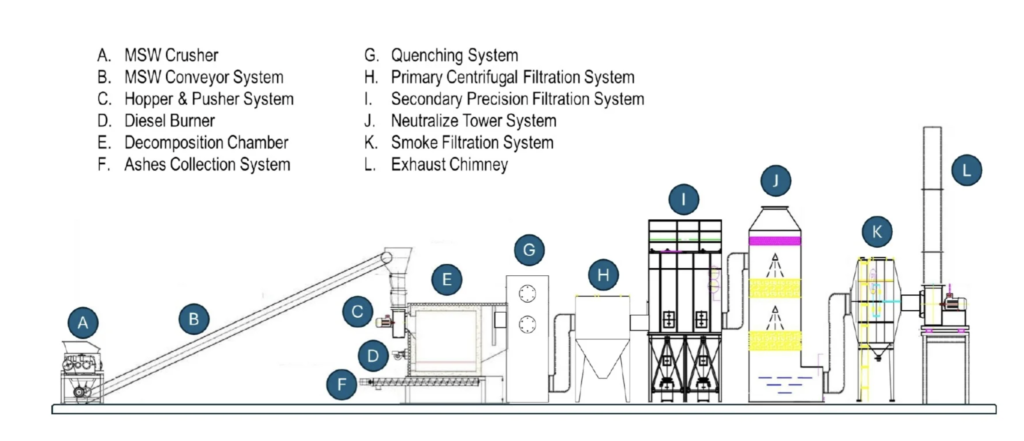
Our processes involve three distinct stages: waste separation, combustion and purification
Stage 1
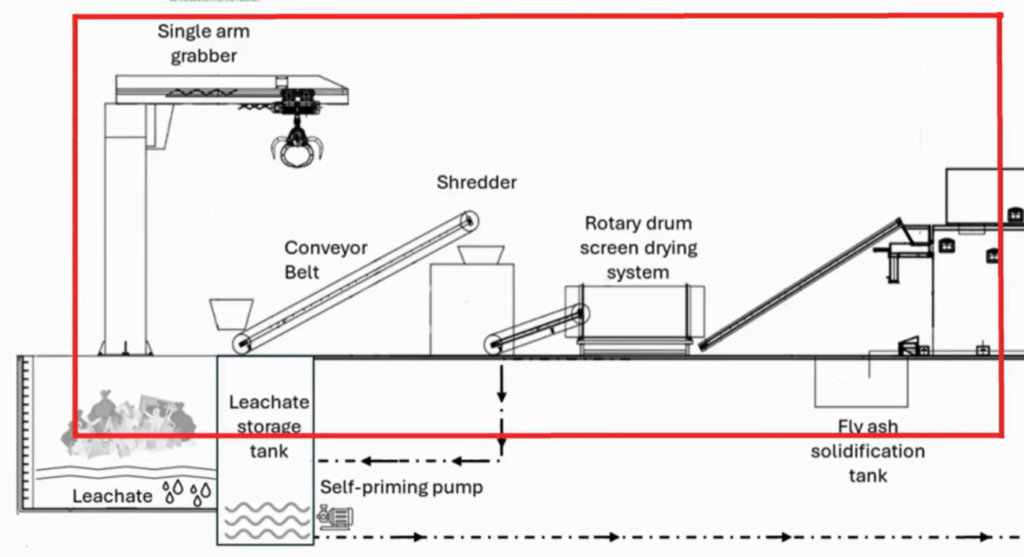
Pre Sorting, Crusher, Magnetic Separator, Conveyor
The first process involves sorting and separating waste, using a horizontal and ascending conveyor belt and crusher with a magnetic separator
Stage 2
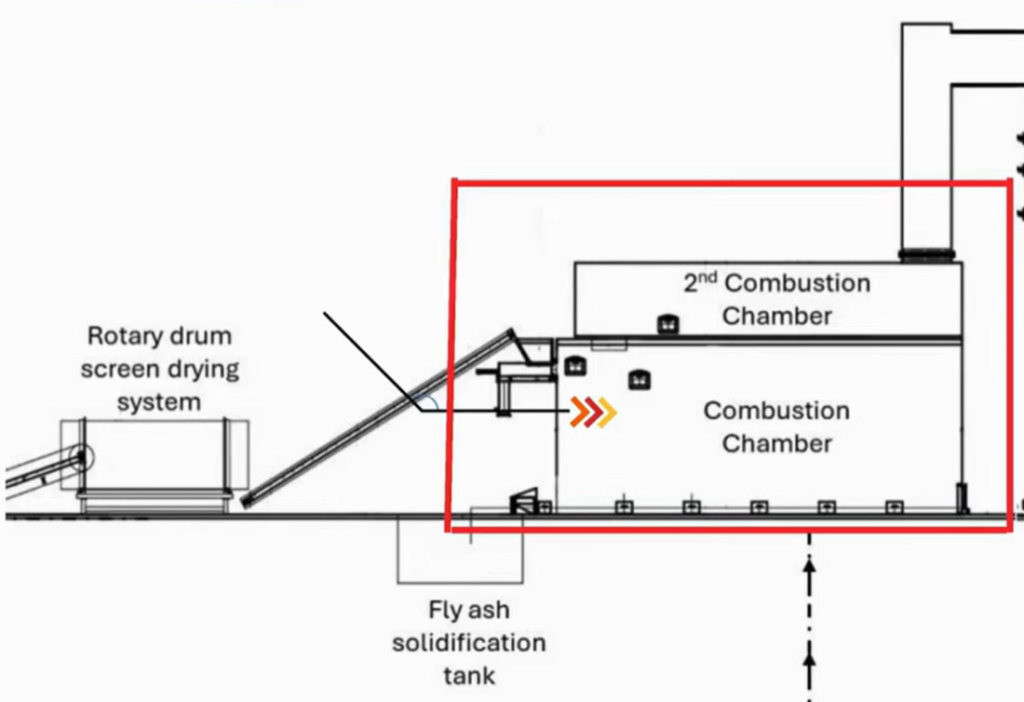
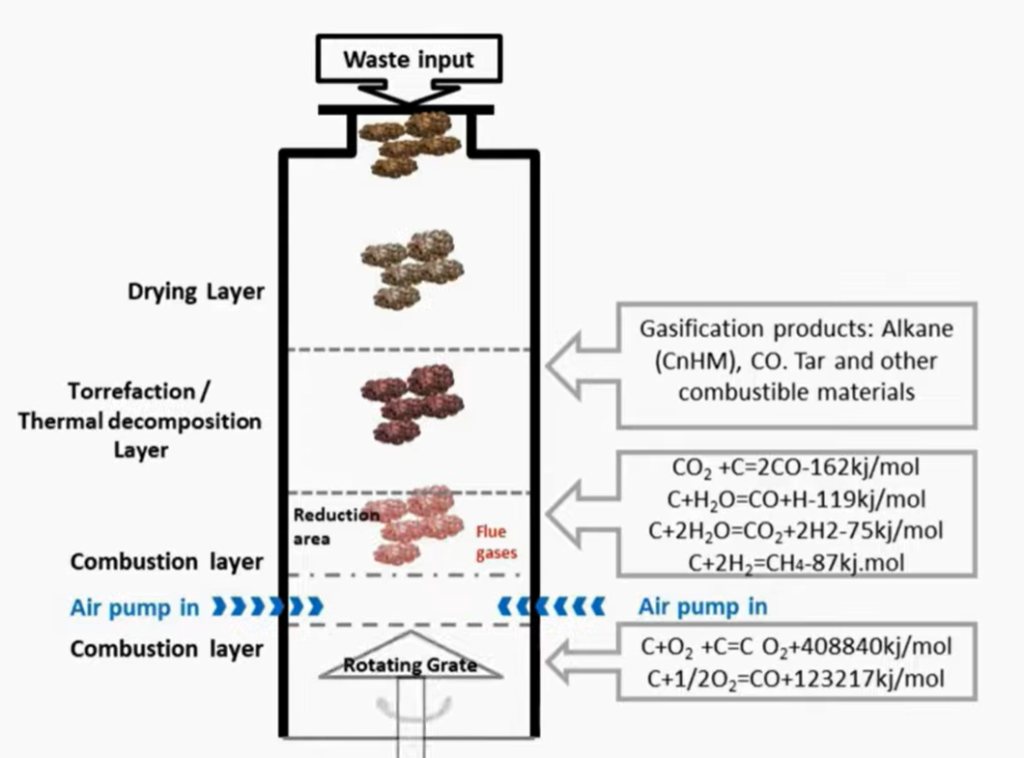
Micro Combustion Chamber
Using a proprietary design, the chamber is constructed using a double layer of specialised bricks and laminated with a mix of Earth Haven..
Stage 3
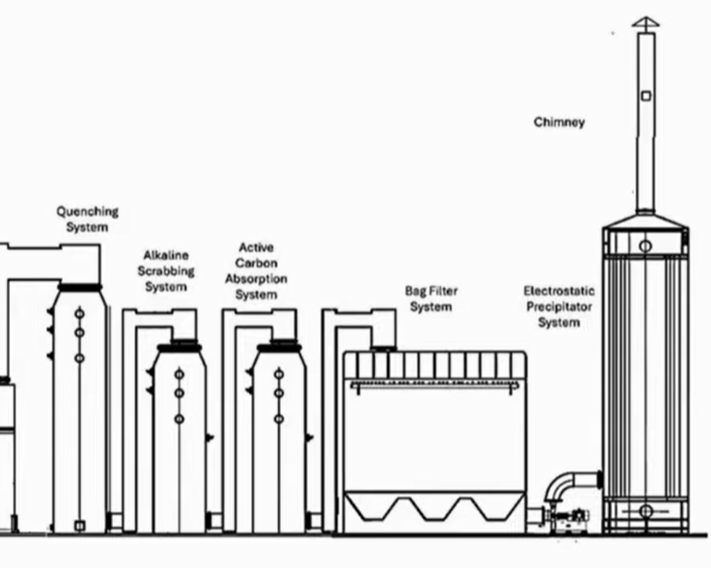
Pollution Control Mechanism
Gases from the Micro Combustion Chamber, including hazardous furans and dioxins which are destroyed at temperatures above 850°C
Our Proven Solutions
Stage 1 : Pre Sorting, Crusher, Magnetic Seperator, Conveyor
EcoEmber’s modular design and 10-tonne capacity, features a horizontal and ascending conveyor belt and crusher, ensure constant and efficient waste pre-treatment.Magnetic separator is embedded into the system to remove previous ferrous metal before the waste is being feed into the combustion chamber. This setup also extracts wastewater from refuse, enhancing the overall efficiency of the thermal disposal operation
Stage 2: Micro Combustion Chamber
Using a proprietary design, the chamber is constructed using a double layer of specialised bricks and laminated with a mix of Earth Haven Clay. In addition to preventing heat from escaping the chamber, it also withstands ultra-high temperatures and ensures constant burning temperatures between 850°C to 1000°C. At these temperatures, most types of domestic waste except for porcelain, glass and metals are effectively incinerated, with remaining ash collected for upcycling.
Stage 3: Pollution Control Mechanism
Gases from the Micro Combustion Chamber, including hazardous furans and dioxins which are destroyed at temperatures above 850°C, are cooled and processed in a multi-stage purification system. It comprises a sophisticated sprinkler system in the Water Scrubbing Chamber, followed by activated carbon to capture toxic particles prior to release.